

Essays

The mind is awakened by truth; the soul stands in the light.
Failure and the Disclosure of Boundaries
Failure, as understood here, is not an evaluation of the subject, but the condition in which a function, mechanism, or process fails to perform its relevant role. Its theoretical value lies in making functional conditions, structural limits, and internal discontinuities available for analysis.
 Ted Wong
The Sense of Reality and the Fragility of Reality-Judgment
This essay distinguishes the sense of reality from reality-status and argues that experiential coherence cannot by itself guarantee that what is experienced genuinely obtains. Dreams serve as a case for the fragility of reality-judgment.
Ted Wong
Do Not Weep for Me
The cross does not merely reveal the suffering of Jesus. It exposes human arrogance, blindness, and sin: man thinks he is judging God, yet it is man himself who is being judged.
Ted Wong
How the Past Shapes the Future
The past does not return in its original form, yet it continues to shape the future through interpretation, expectation, and action. What governs a life is often not simply what happened, but what those experiences came to mean and how they continue to live within us.
Ted Wong
Returning from the Moon——Courage, Awe, and Existential Reflection in the Wake of Artemis II
Artemis II’s return is more than a technological achievement. It is a confrontation with scale, silence, and meaning: a reminder that the farther humanity travels into the cold vastness of space, the more urgently we must reconsider Earth, our lives, and the question of how we ought to exist.
 Ted Wong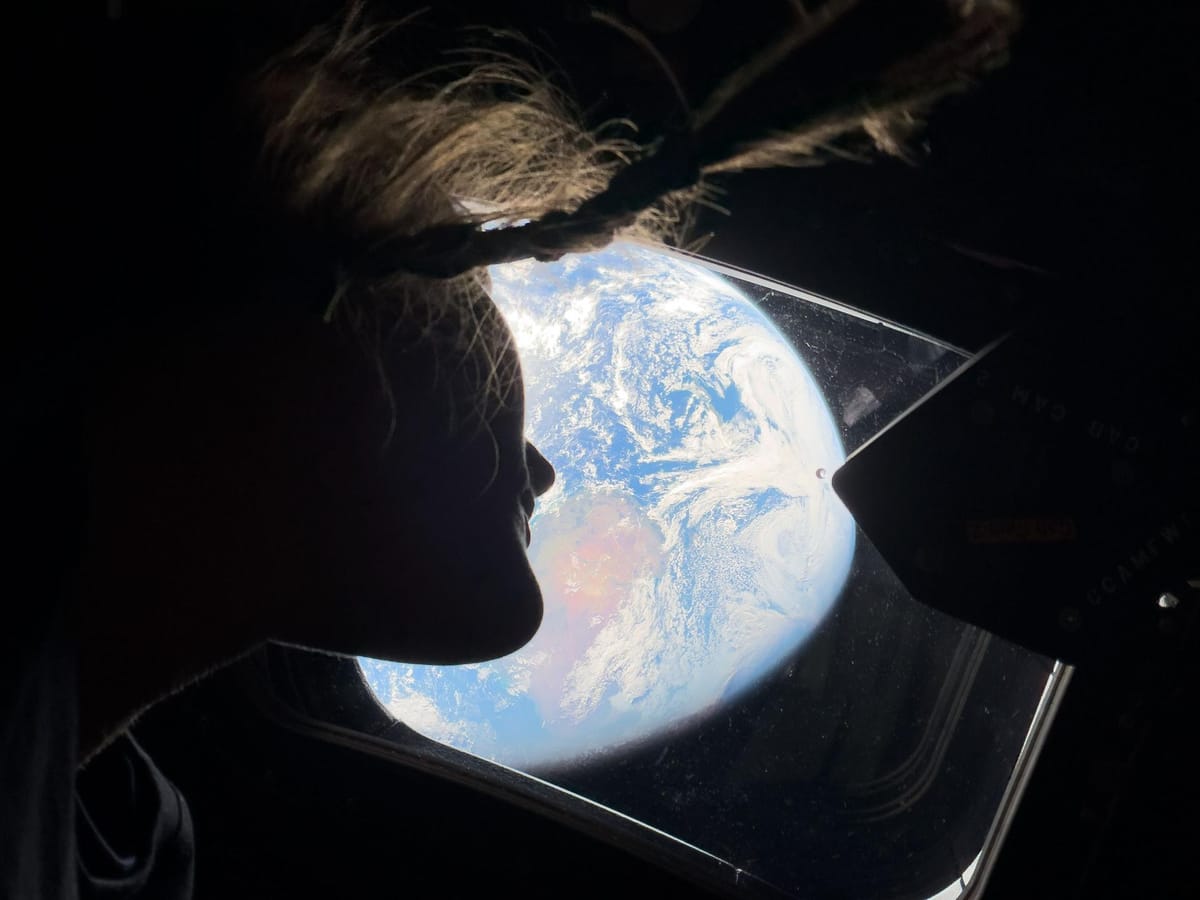
When Man Becomes the Measure: The Inner Contradictions of the Secular Worldview
The secular worldview relocates man into the place of measure, making a finite being the judge of meaning, truth, and value. What follows is not liberation but a deeper drift toward fragility, nihilism, pride, and self-deception.
Ted Wong
Why True Goodness Is Often Unwelcome
True goodness is often unwelcome not because it is weak, but because it exposes self-deception, disrupts systems built on utility, and challenges the fictions that keep societies comfortable. That is why goodness matters most when it is least rewarded.
Ted Wong
The Boundary of Language: What Can Be Said Can Be Thought
Before language, human beings already feel hunger, fear, attachment, and pain. Yet what is felt is not always understood. Language does not merely express thought; it gives thought shape, and in doing so, defines both the reach and the limits of understanding.
Ted Wong
Humans Cannot Be the Standard of Good and Evil
Human beings can discern good and evil in limited ways, but they cannot bear the authority of ultimate moral judgment. The deeper problem is not only that we err, but that we so often place ourselves in God’s position.
Ted Wong
From the Cave to Truth: Cognitive Ascent and the Exclusion of Thought
Plato’s allegory of the cave is not merely a story about ignorance, but an account of epistemic enclosure, painful awakening, and the cost of truth. To see beyond appearances is not only cognitive; it is existential, ethical, and politically perilous
Ted Wong